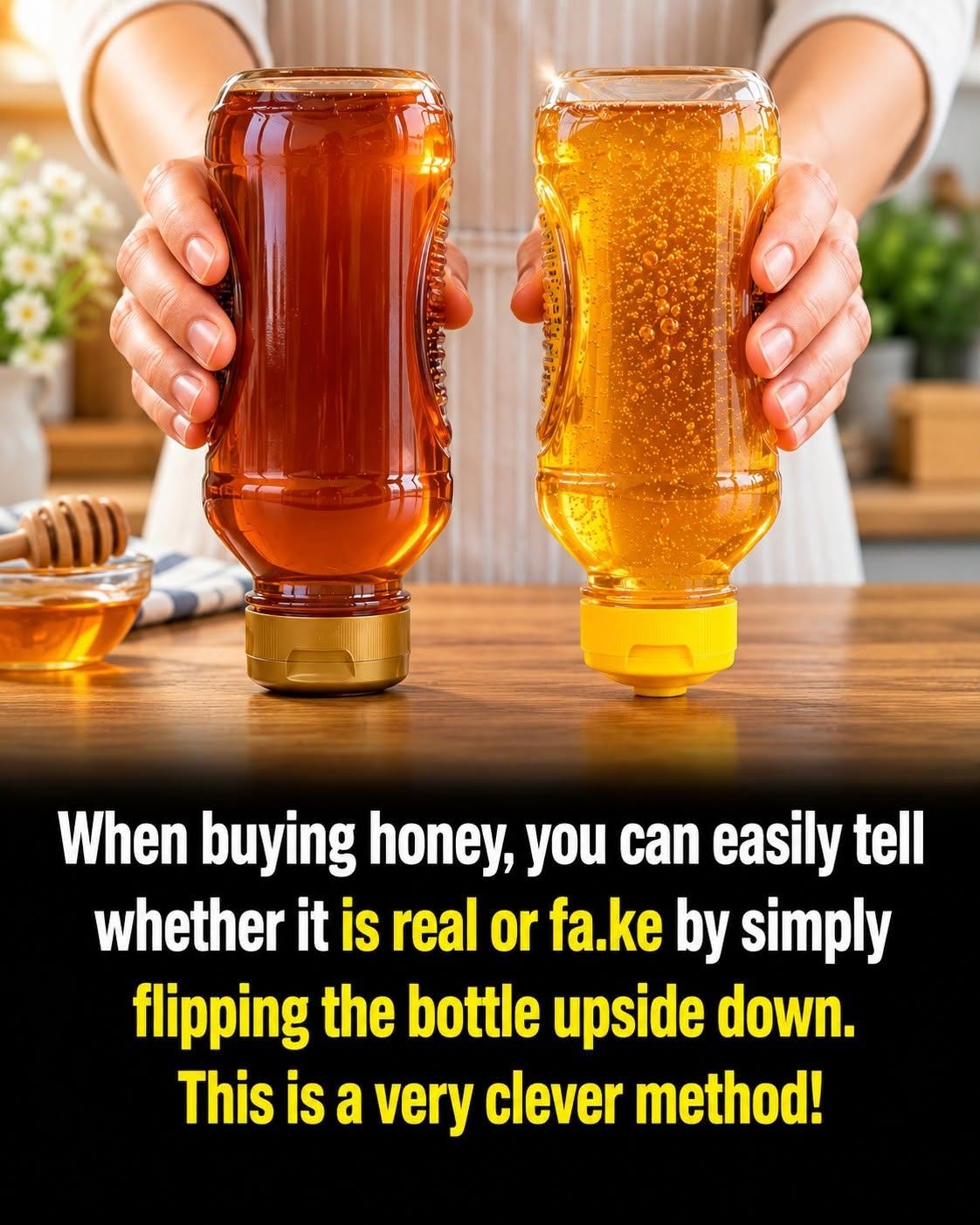
Honey is a concentrated solution of sugars, primarily fructose and glucose, with a relatively low water content. Because of this composition, it is generally denser than ordinary water. When a spoonful is placed gently into a glass, the honey may descend toward the bottom before gradually mixing with the surrounding liquid.
A more diluted product may disperse more rapidly, depending on its composition and the way it enters the water.
How to try the water test at home
You will need only a clean, transparent glass, room-temperature water, and a small spoonful of honey.
Fill the glass with water and place it on a level surface.
Allow the water to become still.
Take a small amount of honey on a spoon.
Slowly release the honey into the center of the glass.
Observe how the honey moves and mixes with the water.
Avoid stirring the glass immediately, because agitation will accelerate mixing and make the initial behavior more difficult to observe.
What should you look for?
A concentrated honey sample may sink in a thick stream or form a dense mass near the bottom before gradually dispersing. This behavior reflects its density and viscosity.
Honey with a higher water content may mix more readily with the surrounding water.
However, this is where the common advice often becomes misleading.
There is no universal rule that genuine honey must remain intact at the bottom of a glass or that counterfeit honey must dissolve immediately. All honey is water-soluble. Given sufficient time, genuine honey will dissolve in water, especially when stirred.
Some adulterated products can also sink because they contain concentrated sugar syrups with a density similar to that of honey. Other authentic varieties may disperse relatively quickly because of their moisture content, temperature, or particular sugar composition.
The test therefore cannot reliably distinguish authentic honey from every possible imitation.
Why the test can still be useful