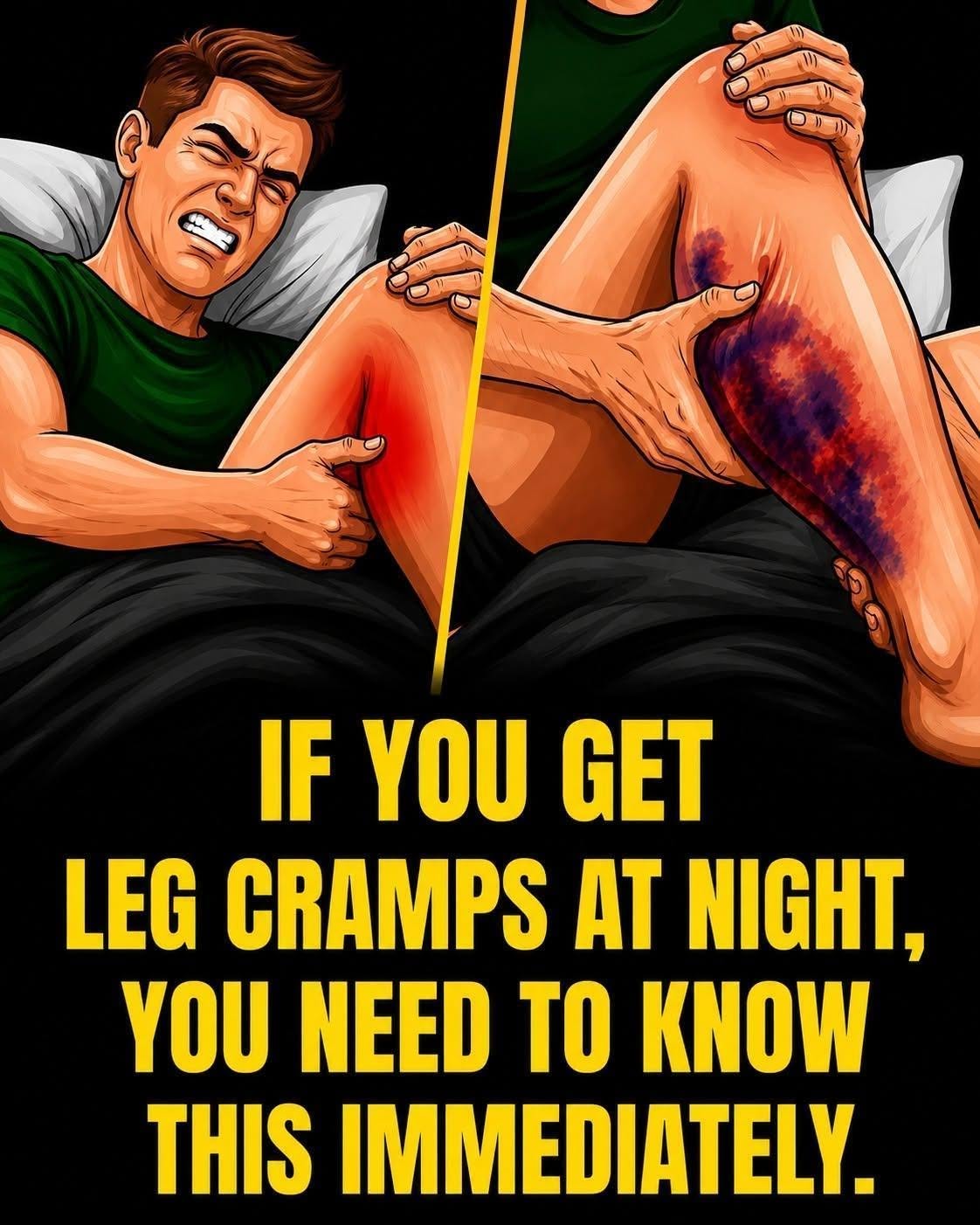
Not necessarily.
Muscle cramps are sometimes associated with circulation problems, but frequent nighttime cramps alone are not enough to diagnose poor circulation.
Circulatory problems are more concerning when symptoms also include:
* Leg pain triggered by walking that improves with rest
* A persistently cold foot
* Changes in skin color
* Wounds that heal poorly
* Weak pulses in the feet
Those symptoms deserve medical evaluation.
## Why You Shouldn’t Ignore Persistent Cramps
The occasional nighttime calf cramp is usually more painful than dangerous.
But recurring episodes are worth paying attention to because they can interfere with sleep and, in some cases, may be related to medication, nerve problems, circulation issues, or another health condition.
The goal is not to panic every time a muscle tightens. It is to recognize when the pattern has changed.
## The Bottom Line
Nighttime leg cramps are sudden muscle contractions that commonly affect the calves, feet, and thighs. Muscle fatigue, prolonged positioning, age, some medications, and certain medical conditions can all contribute.
When a cramp happens, gentle stretching, walking, massage, and warmth may provide relief. Regular stretching, sensible hydration, gradual exercise, and a balanced diet may help reduce future episodes.
But do not assume every cramp means you need magnesium, potassium, or another supplement.
If cramps become frequent, unusually painful, or are accompanied by persistent swelling, redness, numbness, or weakness, get medical advice. Sometimes a nighttime cramp is simply a cramp—but knowing when it is **not** is the important part.