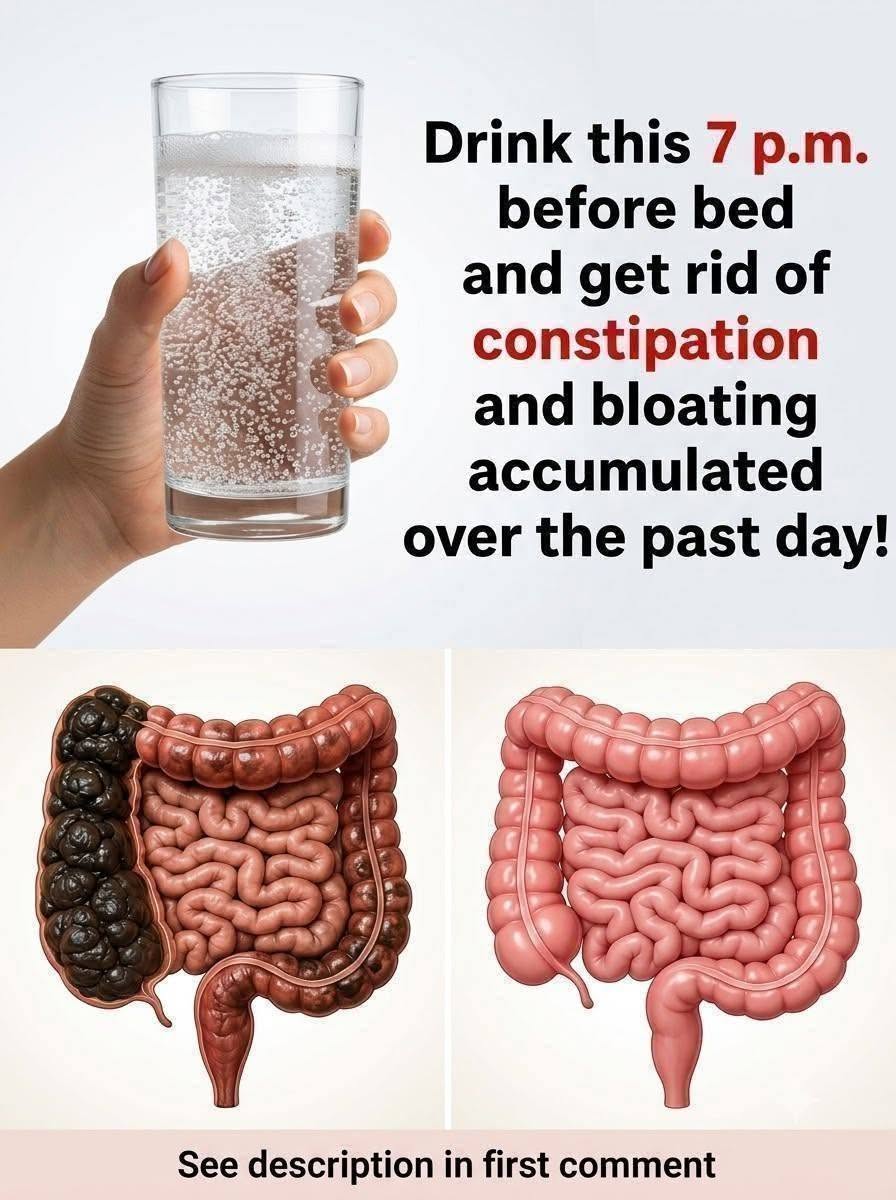
A warm, non-alcoholic drink can be a comforting part of an evening routine, particularly if it helps you maintain adequate fluid intake.
However, it is important not to confuse comfort with a medical “detox.”simple option is:
Simple evening hydration drink
1 cup of warm water
Optional: a small amount of lemon for flavor
Drink slowly rather than consuming a large amount at once
This
drink should be viewed as a hydration habit, not a treatment that physically washes kilograms of waste out of the colon.
If you have a medical condition that requires you to restrict fluids, follow your healthcare professional’s advice instead.
Foods That Can Support Regularity
If constipation is a recurring problem, your overall diet is usually more important than one special drink.
Try incorporating more naturally fiber-rich foods into your meals.
Fruits
Apples, pears, berries, oranges, and other fruits can contribute fiber to the diet. Some fruits also contain naturally occurring compounds such as sorbitol that may help make stools easier to pass.
Vegetables
Vegetables such as broccoli, carrots, peas, and leafy greens can increase your daily fiber intake.
Whole Grains
Oats, whole-wheat bread, brown rice, and other whole grains can be useful alternatives to highly refined grains.
Beans and Lentils
Beans, chickpeas, lentils, and other legumes are naturally rich
in
fiber and can be included in soups, salads, or main meals.
Seeds
Flaxseed and other seeds can contribute fiber to the diet. If you increase your fiber intake, remember to increase fluids appropriately as well.
Why You May Feel “Full of Waste”
Bloating does not necessarily mean that kilograms of old stool are sitting inside your colon.
Bloating can have many possible causes, including constipation, gas, eating habits, food intolerances, changes in gut movement, and other digestive issues.
This is why the sensation of being “full” should not automatically