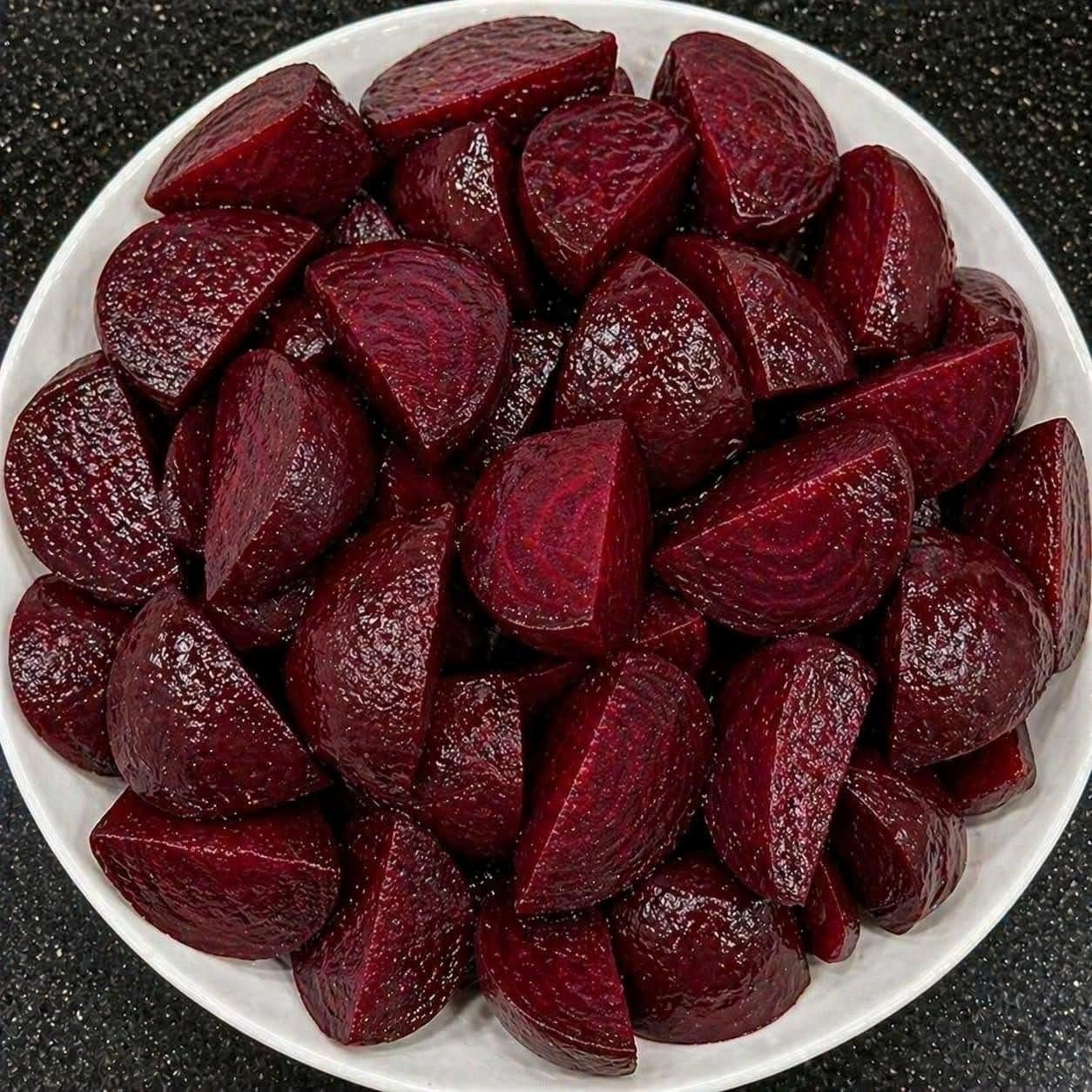
One of the best-studied components of beets is inorganic nitrate.
After consumption, dietary nitrate can contribute to the production of nitric oxide, a signaling molecule involved in blood-vessel relaxation and circulation. Clinical research has therefore examined beetroot and nitrate-rich foods in relation to cardiovascular function.
A systematic review and meta-analysis of randomized controlled trials found that inorganic nitrate intake was associated with reductions in resting blood pressure. Another review specifically examining beetroot nitrate supplementation found improvements in some cardiovascular measures, including arterial stiffness and endothelial function.
This does not mean that eating beets treats hypertension or replaces prescribed medication. Rather, beets can be one part of a dietary pattern that supports cardiovascular health.
2. They May Support Blood Vessel Function
Healthy blood vessels need to expand and contract appropriately. This process is partly regulated by nitric oxide.
Research examining beetroot and inorganic nitrate has reported improvements in endothelial function, which refers to how well the inner lining of blood vessels functions. A meta-analysis of randomized trials found an association between nitrate/beetroot consumption and improved vascular function.
The effects can vary according to factors such as the amount of nitrate consumed, age, baseline blood pressure, and overall cardiometabolic health.
3. Beets May Help Exercise Performance