Evidence concerning fermented foods and gastrointestinal health has become increasingly interesting.
A 2025 systematic review and meta-analysis of 25 studies, including 19 randomized controlled trials, reported improvements in several gastrointestinal outcomes associated with fermented-food consumption, including bowel-movement frequency, stool consistency, intestinal transit time, and some gastrointestinal symptoms. However, the researchers noted that the certainty of evidence varied and was often low.
These findings concern fermented foods generally, not fermented beets specifically.
Therefore, it would be more accurate to say that fermented beets can contribute to a diet containing fermented vegetables rather than claiming that fermented beets have been proven to treat constipation or digestive disease.
10. Beets and Fermented Beets Are Not the Same Thing
There are several important differences.
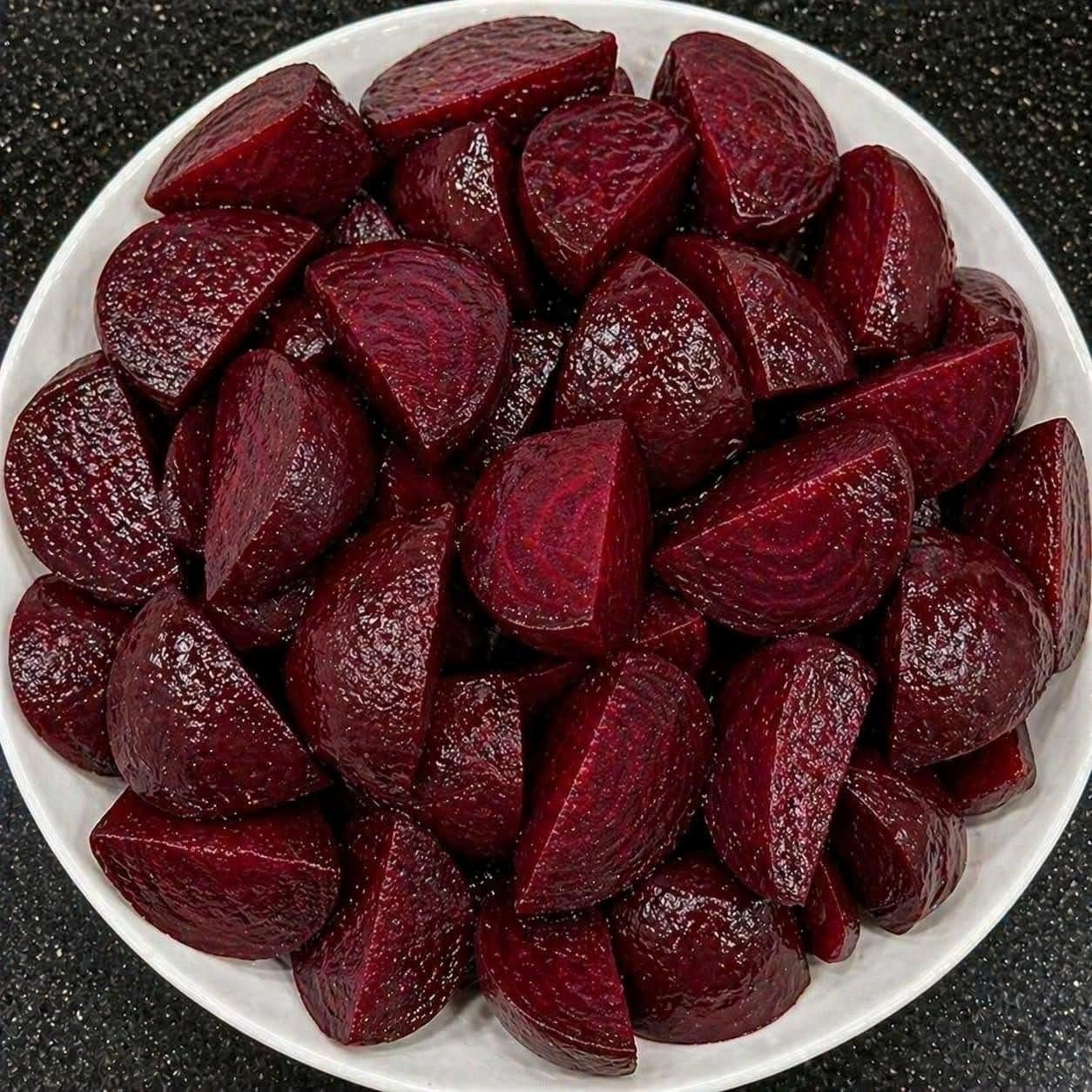
Fresh or cooked beets
These primarily provide:
Dietary nitrate
Fiber
Betalains
Folate
Potassium
Other plant compounds
Their strongest research interest is currently related to cardiovascular function and exercise physiology.
Fermented beets
These provide the nutrients naturally present in beets while also undergoing microbial fermentation.
Depending on the fermentation process, they may contain:
Lactic-acid bacteria
Organic acids
Fermentation metabolites
Modified plant compounds
However, the exact nutritional and microbial profile depends heavily on the fermentation method.
11. A Simple Way to Include Beets in Your Diet
Beets don’t need to be consumed as a supplement.
You can enjoy them:
Roasted with olive oil and herbs
Added to salads
Blended into smoothies
Grated into vegetable salads
Added to soups
Served with yogurt or a creamy dressing
Naturally fermented as a vegetable
For fermented beets, choose products prepared using a proper food-safe fermentation method and follow appropriate refrigeration and storage instructions after fermentation.
12. A Note About Beetroot and Blood Pressure Medication