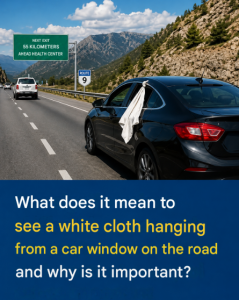
A mechanical breakdown. This is the most frequent case. The vehicle is immobilized, the hazard lights are insufficient to explain the situation, and the driver is trying to alert other road users.
A medical emergency on board. Sometimes, the vehicle’s occupants try to signal that someone needs immediate medical attention and that they are driving towards emergency services.
An organized convoy. During group travel—pilgrimages, funeral processions, group trips—the white cloth can be used to identify vehicles belonging to the same group.
Running out of fuel. Less common, but possible: the vehicle is stopped, waiting for assistance.
What this signal does not grant:
Beware of the misconception: a white cloth is not a pass. It does not confer any legal priority. Only official emergency vehicles—ambulances, fire trucks, police cars—have this right, and only when using their flashing lights and sirens.
A driver who hangs a cloth from their window cannot run red lights, exceed speed limits, or use reserved lanes. The courtesy of other drivers remains entirely voluntary.
How should you react if you encounter one? Don’t panic, but don’t be indifferent either. Here are the correct actions to take: