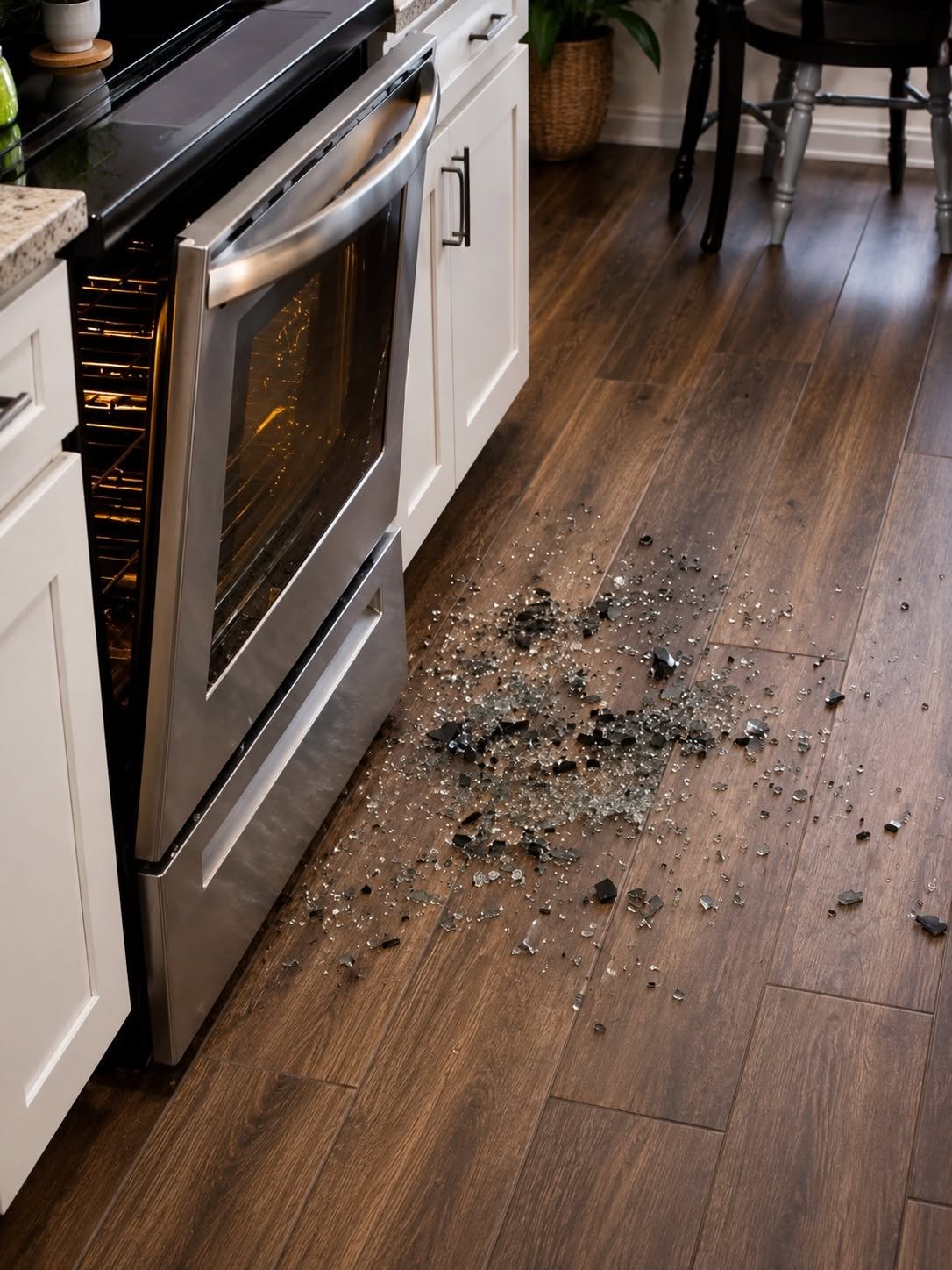
The main causes: glass subjected to high stress
The door of an oven is usually made of tempered glass or borosilicate glass , two types of materials selected for their ability to withstand heat and impacts:
Soda-calcium tempered glass : The most common type, it withstands heat well but can be sensitive to sudden temperature changes.
Borosilicate glass : Less commonly used in domestic ovens, this glass is particularly robust against temperature variations.
However, cracks or breaks may occur due to:
Microscopic defects embedded in the glass, such as nickel sulfide inclusions.
Repeated exposure to extreme thermal cycles , especially when using the oven’s self-cleaning mode.
Behaviors to avoid: protecting the oven door
Although the glass used is strong, certain actions can compromise its resistance:
Do not overload the door : Avoid placing heavy objects, even temporarily, on the open door.
Caution when cleaning : Avoid abrasive sponges and harsh chemicals that can cause micro-cracks.
Preventing impacts : Do not hit the glass with dishes or utensils to avoid any breakage.
Avoid thermal shock : Never place a cold dish in a hot oven, nor a hot dish in a cold oven.
Tips and recommendations for maintaining your oven door
To ensure a long lifespan for your oven door, here are a few simple practices to adopt:
Clean gently :