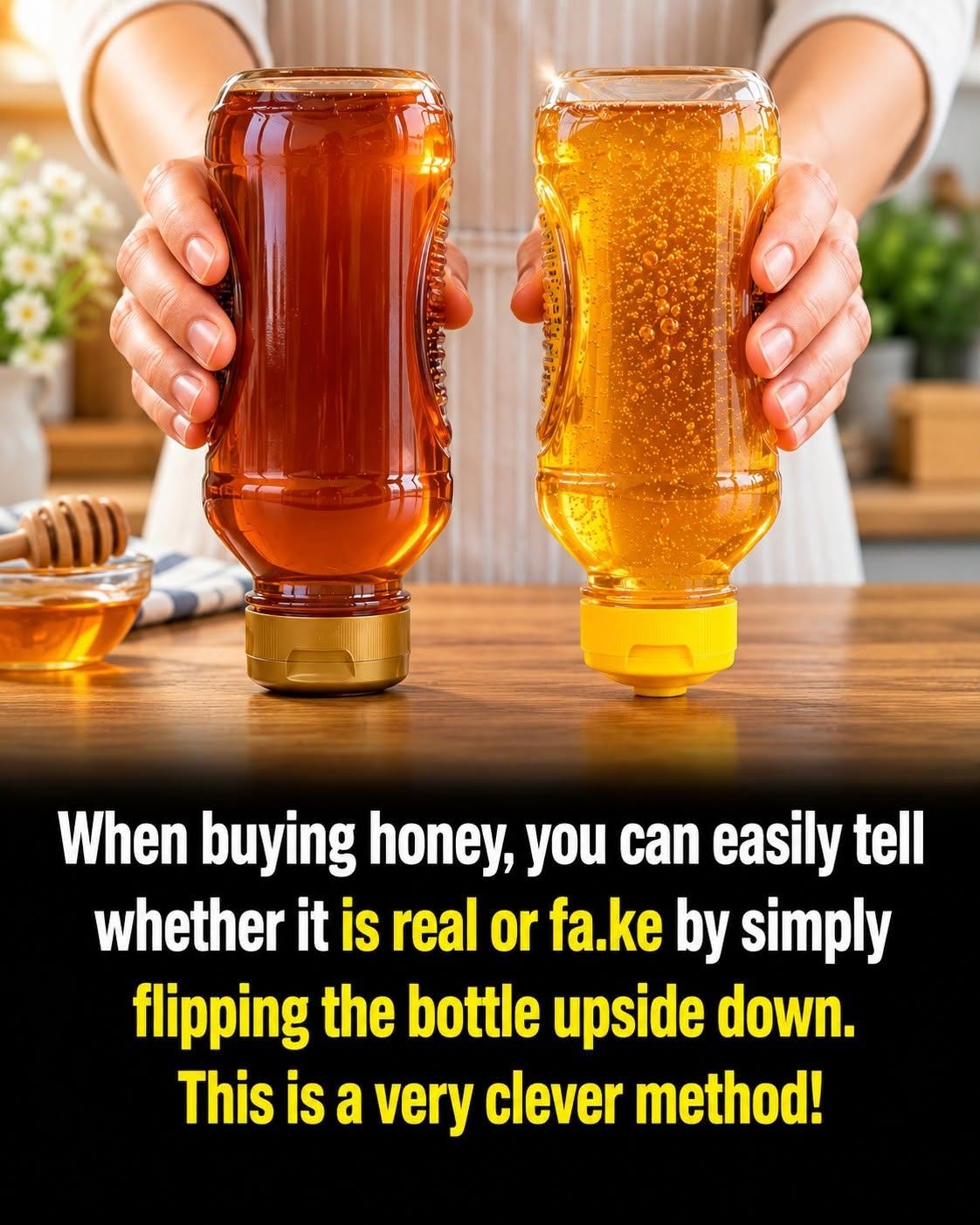
While household experiments attract attention, the information printed on a product’s packaging may be more useful when deciding what to buy.
Many consumers spend considerable time examining the color and texture of honey while overlooking the ingredient list, producer information, and product description.
These details can help establish what the seller is actually claiming.
Check whether the product is labeled as honey
Read the product name carefully. A product described as honey-flavored syrup, honey blend, or a sweetener containing honey may not be equivalent to a product sold as pure honey.
The precise labeling requirements vary by country, so consumers should consider the applicable food regulations.
If the product contains multiple ingredients, examine the ingredient list to understand what is included. Depending on the product category and local rules, added sweeteners may be declared.
A transparent label is useful because it gives the consumer a clearer picture of the product’s composition.
Look for producer and origin information
A trustworthy product should provide meaningful information about the producer, packer, or responsible business, along with origin information where required.
This information can help consumers trace the product and contact the supplier if questions arise.
Be cautious of vague claims that cannot be verified. Statements such as “100% natural,” “premium quality,” or “pure golden honey” may sound reassuring, but marketing language alone does not establish authenticity.
Where available, look for batch numbers, production or packaging dates, and contact details.
These details do not guarantee purity, but they improve traceability.
Do not assume that a higher price proves authenticity
Genuine honey can be expensive to produce, and exceptionally cheap products may deserve closer scrutiny. Nevertheless, price is not a scientific test.
A low price may reflect a sale, a large production volume, a different floral source, or a lower-cost packaging arrangement. Conversely, an expensive product may still be mislabeled or adulterated.
The most sensible approach is to compare products with similar origins, packaging sizes, and stated quality characteristics.
If one bottle is dramatically cheaper than comparable products while making unusually impressive claims, investigate before buying.
Price should raise questions when appropriate, not serve as the final answer.
6. Why Fake Honey Can Be Difficult to Detect