To understand why home tests have limitations, it helps to examine the chemistry of honey itself.
Genuine honey is not a single, uniform substance. It is a complex natural product containing sugars, water, organic acids, enzymes, minerals, aroma compounds, and varying amounts of pollen and other naturally occurring material.
Its exact composition changes with the flowers visited by bees, the environmental conditions, the maturity of the honey, and the methods used to harvest and process it.
This natural variation is one reason honey from different regions can have distinct colors, aromas, and textures.
The role of sugar composition
Fructose and glucose make up most of honey’s sugars. Their relative proportions influence sweetness, crystallization, and viscosity.
Some adulterants, including certain concentrated plant-based syrups, also contain substantial amounts of sugars. Depending on the type and concentration, these products can resemble honey in appearance and physical behavior.
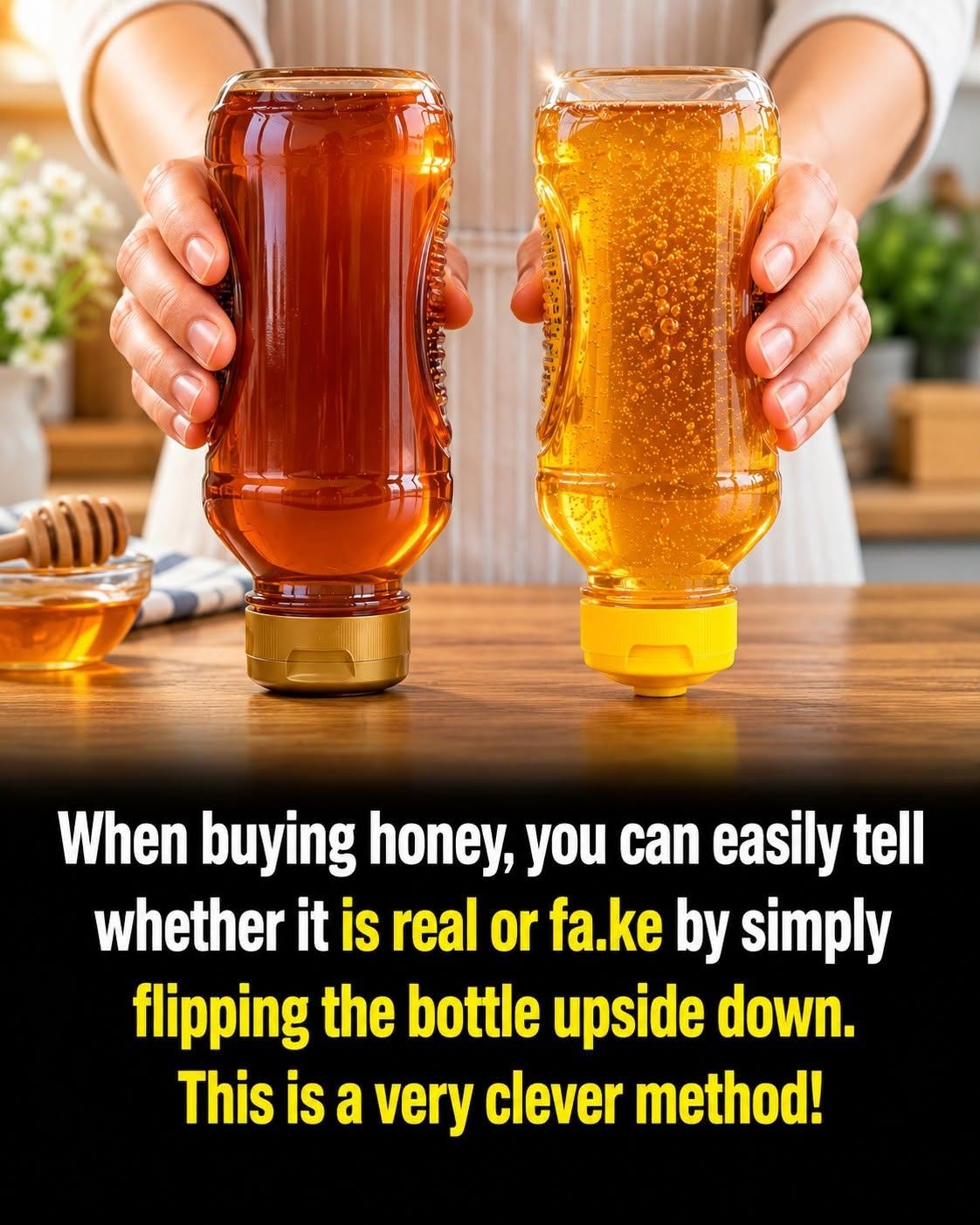
A mixture containing added syrup may still be thick. It may sink in water. It may even crystallize.
This is why physical tests can be misleading: they measure observable properties, not the complete chemical identity of the product.
Moisture content matters
The water content of honey affects its consistency and storage stability.
Honey with excessive moisture may be more susceptible to fermentation under suitable conditions. However, the moisture level of genuine honey can also vary naturally, and a watery appearance alone cannot establish whether the product has been adulterated.
Properly harvested and stored honey generally has a moisture content consistent with applicable quality standards.
Reliable quality assessment may involve measuring moisture, sugar composition, acidity, and other characteristics under controlled conditions.
Processing can change appearance
Commercial honey may be filtered to remove particles and heated to improve handling or delay crystallization. These practices can influence its clarity and texture.
They do not automatically mean that the product is fake.
Likewise, cloudy honey is not necessarily pure, and perfectly clear honey is not necessarily counterfeit. Both appearance and processing history must be considered in context.
The central problem is that adulteration can be designed to imitate the physical properties consumers commonly associate with authentic honey.
When the financial incentive is strong, appearance alone becomes an unreliable safeguard.
7. The More Reliable Scientific Methods for Identifying Adulterated Honey
If home tests cannot conclusively establish authenticity, what can?