The answer is laboratory analysis.
Food laboratories can examine several chemical and physical characteristics to determine whether a honey sample is consistent with its claimed composition and origin.
The appropriate method depends on the suspected adulterant and the question being investigated.
Sugar-profile analysis
Honey contains a characteristic distribution of sugars. Laboratory methods can measure the amounts of fructose, glucose, sucrose, and other carbohydrates.
An unusual sugar profile may indicate that the product does not match the expected composition of the claimed honey.
However, natural variation must be taken into account. A result should be interpreted against appropriate reference data and relevant standards rather than judged using a single universal number.
Stable carbon isotope analysis
One established technique uses stable carbon isotope ratios to investigate certain forms of sugar adulteration.
Many plants use different photosynthetic pathways. Sugars derived from plants such as corn and sugarcane can have different carbon isotope signatures from the sugars typically found in honey produced from nectar.
By comparing isotope measurements from different fractions of a sample, laboratories can identify evidence consistent with the addition of certain C4 plant-derived sugars.
This method is particularly useful for detecting some types of adulteration, but it does not detect every possible syrup.
For example, syrups derived from plants using the same broad photosynthetic pathway as many flowering plants may require other analytical approaches.
Nuclear magnetic resonance and advanced profiling
Nuclear magnetic resonance spectroscopy and other advanced analytical techniques can examine multiple compounds within a sample.
When supported by suitable reference databases, these methods may help identify unusual chemical profiles, assess consistency with claimed origins, and detect certain forms of adulteration.
Other methods may examine specific carbohydrates, pollen characteristics, trace elements, or volatile compounds.
No single analytical technique detects every possible form of fraud. A robust assessment may require multiple complementary methods, especially when the suspected adulterant is designed to resemble genuine honey chemically.
What consumers should take away
You do not need laboratory equipment to make better purchasing decisions. However, it is important to understand the difference between a useful household observation and a scientifically validated authenticity test.
A home test can help you notice unusual characteristics. Laboratory analysis can provide stronger evidence about composition.
If you suspect that a product has been deliberately misrepresented, keep the original packaging, batch number, purchase receipt, and any available documentation. Contact the seller or relevant food-safety authority if the concern is serious.
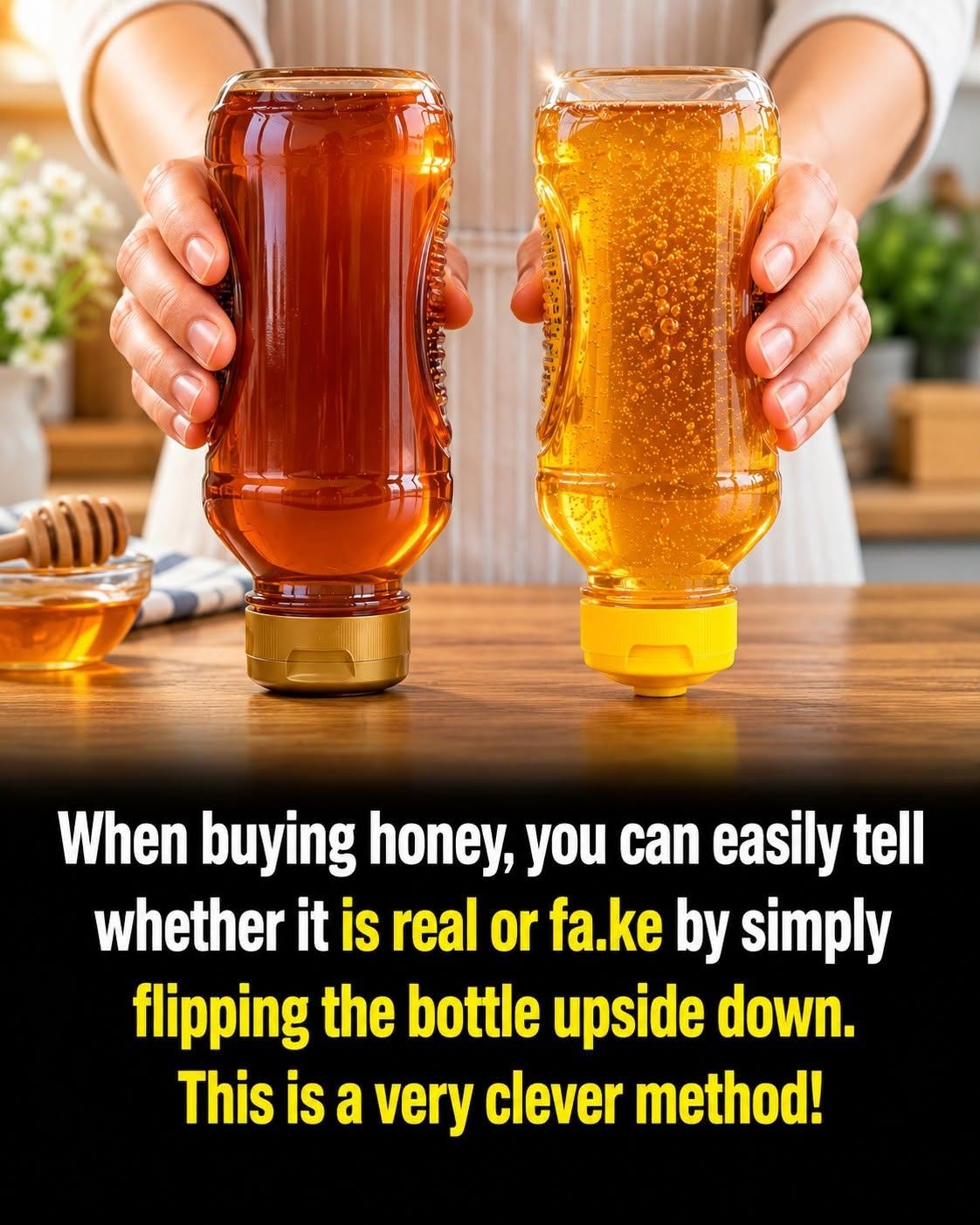
This approach is more reliable than relying on viral demonstrations alone.
8. Common Honey Myths That Can Mislead Consumers
Advice about identifying pure honey circulates widely on social media. Some suggestions are based on genuine physical principles, but many turn those principles into rules that are too absolute.
Understanding the difference can prevent unnecessary waste and false confidence.
Myth 1: Real honey never dissolves quickly in water
Honey is water-soluble. Its concentrated composition may cause it to sink or disperse gradually when first added to still water, but it will eventually dissolve.
The speed depends on concentration, temperature, agitation, and the particular honey or syrup involved.
Therefore, rapid mixing is not conclusive evidence of adulteration.
Myth 2: Genuine honey always crystallizes
Some genuine honey crystallizes quickly, while other varieties remain liquid for long periods.
Crystallization depends on sugar composition, moisture content, temperature, and other factors. It cannot serve as a universal pass-or-fail test.
Myth 3: Ants never approach real honey
Ant behavior is not a reliable method of determining authenticity.
Honey contains sugars that can attract insects, but insect activity also depends on the species, surrounding food sources, environmental conditions, and accessibility of the product.
Whether ants approach a bottle tells you very little about its chemical composition.
Myth 4: Real honey burns, while fake honey does not
Burning tests are unreliable and potentially dangerous. Honey contains water, and its combustion behavior depends on several variables. Different mixtures can behave unpredictably.
Never use an open flame as a method of verifying food authenticity.
Myth 5: Real honey always has a strong floral smell