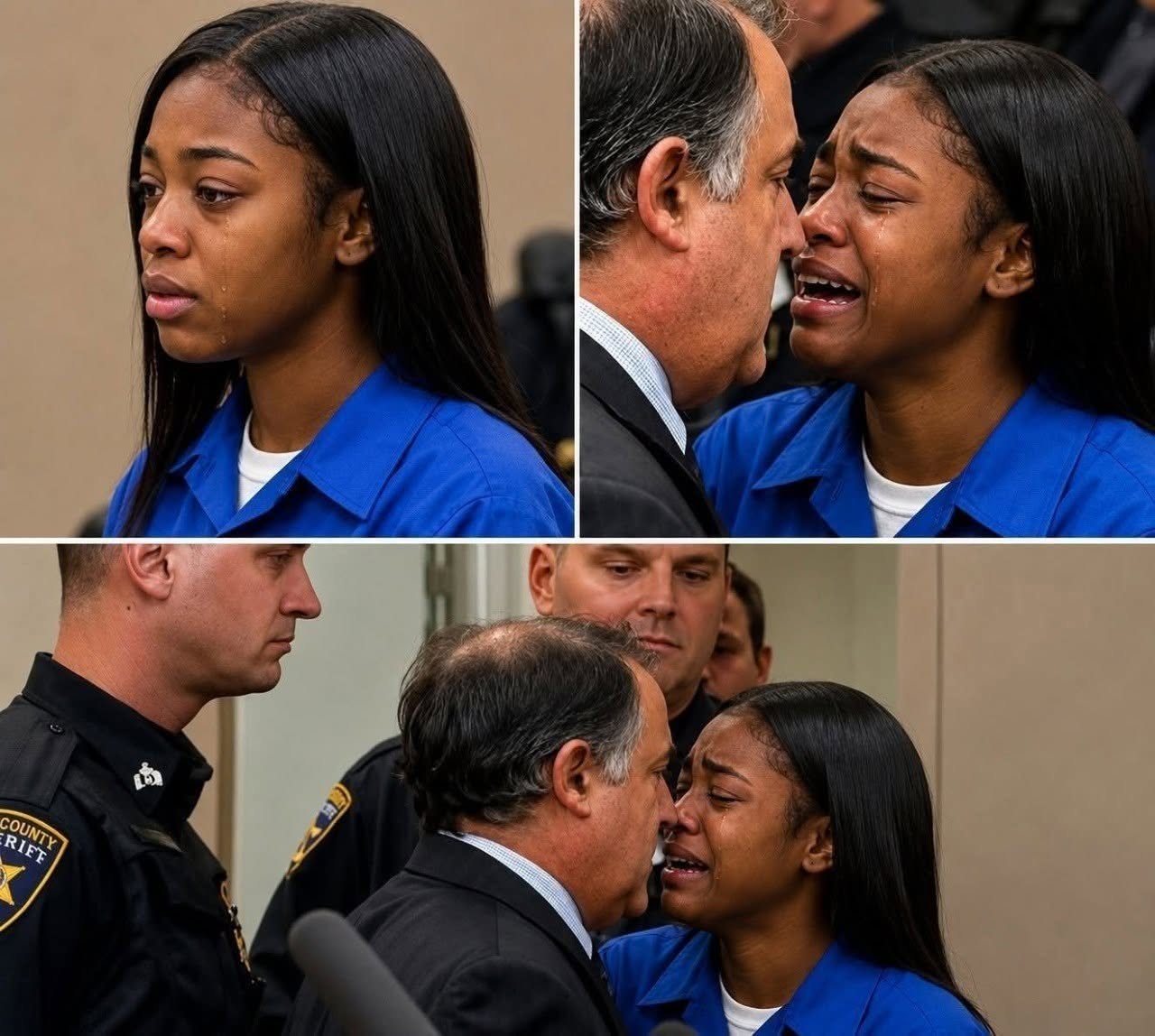
The fictional sentence of 86 years represents the enormous difference that can exist between a teenager’s age and the punishment imposed after a serious conviction.
Sentencing laws vary considerably between jurisdictions.
The precise sentence in a real case would depend on the charges, jurisdiction, aggravating and mitigating factors, criminal history, and applicable sentencing rules.
In this fictional scenario, prosecutors seek a lengthy sentence because of the severity of the offense and Maya’s alleged role.
The defense argues that the sentence is disproportionate given her age.
After considering the arguments, the judge announces the sentence.
Eighty-six years in prison.
The courtroom becomes silent.
Maya looks toward her family.
Her mother begins crying.
The victim’s relatives sit quietly.
The number hangs in the room.
Eighty-six years.
For a teenager, it represents almost an entire lifetime.
The Meaning of a Sentence
A prison sentence serves several purposes.
It can punish a person for wrongdoing.
It can protect society from someone considered dangerous.
It can provide a measure of justice for victims.
And, ideally, it can provide opportunities for rehabilitation.
But when a sentence is extremely long, rehabilitation becomes more complicated.
A person sentenced at 17 could enter prison as a teenager and potentially spend decades behind bars.
During that time, they may change dramatically.
They may mature.
They may earn educational qualifications.
They may participate in counseling.
They may develop remorse.
They may become entirely different from the person who committed the crime.
That raises a difficult question:
Should the justice system leave room for that possibility?
The Science of Adolescent Decision-Making
One reason juvenile sentencing remains controversial is that adolescence is a period of major development.
Teenagers can understand right and wrong.
They can make deliberate choices.
They can also be held accountable for serious wrongdoing.
But their judgment and impulse control continue developing into early adulthood.
Young people can be particularly influenced by peers.
They may take risks to gain acceptance.
They may struggle to anticipate long-term consequences.
None of this excuses violent crime.
It does, however, help explain why courts sometimes treat juvenile defendants differently from adults.
The question is not whether a teenager should be held responsible.
The question is how that responsibility should be measured.
Maya’s Family Speaks
In the fictional story, Maya’s family refuses to describe her as simply a monster.
They acknowledge that she made serious choices.
They do not deny the suffering caused by the crime.
But they also believe their daughter is more than the worst thing she has ever done.
Her mother tells the court that Maya was still a child when her life began falling apart.
She describes the daughter she remembers from childhood.
A little girl who loved drawing.
A teenager who wanted to become independent.
A young person who made mistakes and sometimes struggled with the consequences.
Her mother asks the judge not to forget Maya’s age.
But the victim’s relatives ask the judge not to forget theirs.
They have lost someone permanently.
There is no sentence that can restore the victim’s life.
The Victim’s Family Wants Accountability