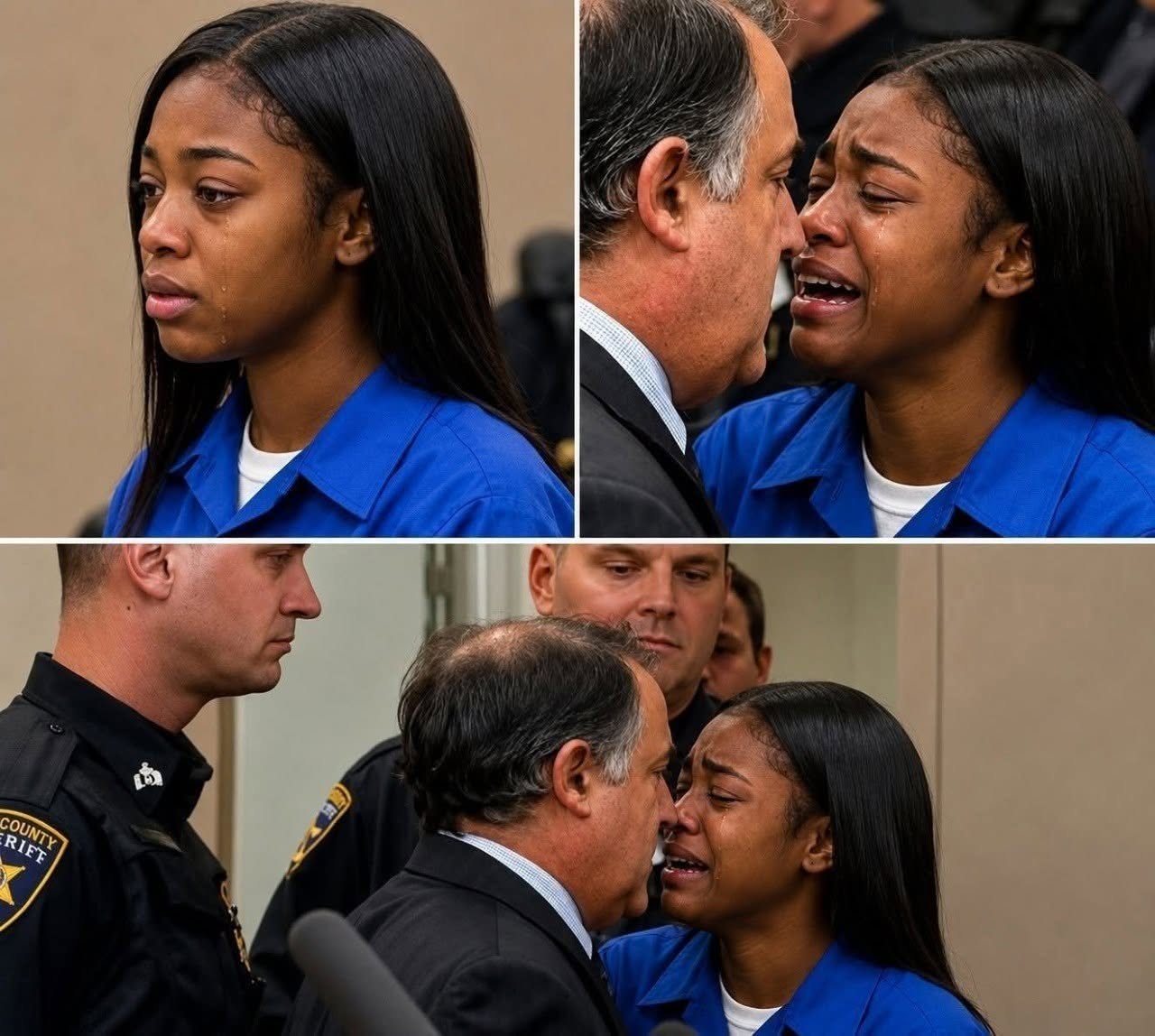
During sentencing, the victim’s relatives deliver emotional statements.
They speak about anger.
They speak about grief.
They speak about the empty chair at family gatherings.
One relative explains that the hardest part is knowing that the victim will never get to experience the future they had planned.
Graduation.
Marriage.
Career.
Travel.
Growing older.
All of those possibilities ended.
The family argues that a serious crime deserves a serious consequence.
Their position is understandable.
For families affected by violent crime, justice can become intertwined with grief.
A lengthy sentence cannot erase the loss, but it can provide a sense that the legal system recognized the seriousness of what happened.
Could Maya Change?
That question becomes central after sentencing.
An 86-year-old person looking back on their life may have decades of experiences behind them.
Maya enters prison as a teenager.
If she survives to old age, she could spend the overwhelming majority of her life incarcerated.
During those years, she may become almost unrecognizable from the teenager who entered the prison system.
She may develop empathy.
She may regret her actions.
She may seek forgiveness.
She may help other incarcerated people.
She may complete educational programs.
She may become a mentor.
But none of those possibilities can undo the crime.
That is the uncomfortable reality of rehabilitation.
Change does not erase responsibility.
The Debate Over Juvenile Justice
Cases involving teenagers convicted of serious crimes often generate intense public debate.
One side argues that young offenders must face consequences when their actions cause devastating harm.
The other emphasizes that teenagers have a greater capacity for rehabilitation than older offenders.
Both arguments contain important truths.
Victims deserve justice.
Communities deserve safety.
Young offenders deserve accountability.
But young offenders may also deserve an opportunity to demonstrate that they can change.
The challenge for courts is balancing these competing interests.
What Happens Inside Prison?
A lengthy sentence does not mean that life stops.
Prison becomes the environment in which the person must grow up.
Maya would experience adulthood under restrictions that most people never face.
She would have limited freedom.
Her relationships would be affected.
Her family might age while she remains incarcerated.
Friends could move away.
People she once knew might marry, start families, build careers, and travel while she remains behind prison walls.
The psychological impact of such a sentence could be enormous.
At the same time, prison can provide structure and access to programs designed to help incarcerated people change.
Education, counseling, vocational training, and behavioral programs may become part of daily life.
Whether those opportunities are enough to produce meaningful rehabilitation is a matter of individual circumstances.
The Family’s Pain Continues
A criminal case ends in a courtroom.
Grief does not.
For the victim’s family, the sentencing hearing may provide a sense of closure, but it cannot restore what was lost.
Birthdays continue.
Anniversaries arrive.
Holidays return.
Every year can bring another reminder of the person who is missing.
For Maya’s family, the experience is different but also painful.
They must live with the knowledge that their daughter will spend decades in prison.
They may visit her.
They may write letters.
They may maintain relationships.
But the childhood and adulthood they imagined for her are gone.
Two families are therefore left carrying consequences that began with a single violent event.
The Danger of Defining a Person by One Moment