Wearing the same few shirts repeatedly naturally puts more stress on them.
Rotating your wardrobe gives individual garments a break and can help extend their useful life.
How to Tell Whether It’s Friction or Insects
There’s no single test that works in every situation, but a few patterns can help.
Friction Is More Likely When:
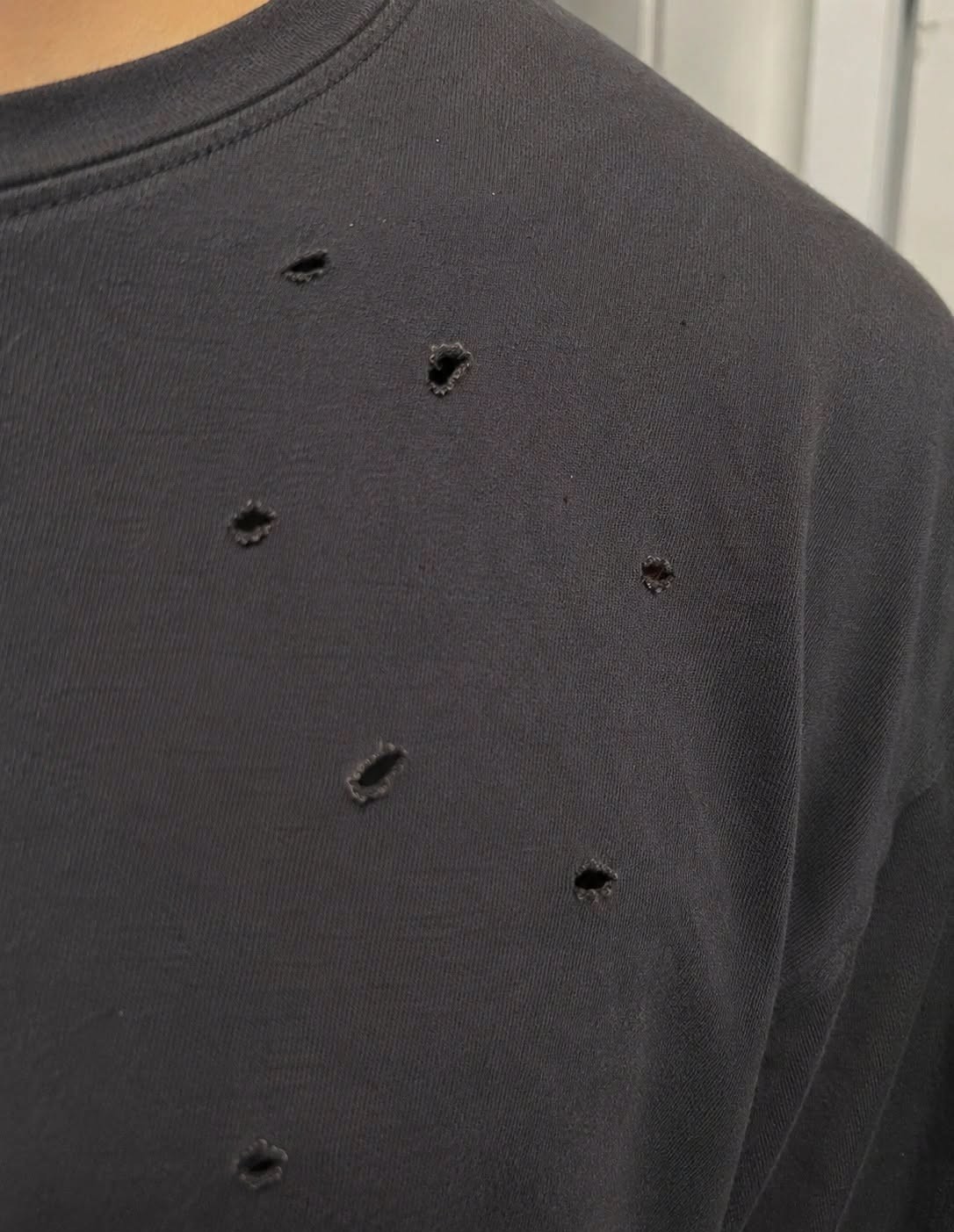
Holes appear in the same location
Damage is concentrated near shirt hems
You notice holes mainly in frequently worn garments
The fabric is thin or lightweight
You regularly lean against counters or desks
Other clothing stored away remains unaffected
Fabric Pests May Be More Likely When:
Damage appears on stored clothing
Multiple garments are affected
Natural animal fibers are involved
You notice larvae, shed skins, or webbing
Damage occurs in dark, undisturbed storage areas
If you’re seeing signs of an infestation, addressing the source is more important than simply replacing damaged clothing.
What to Do With a Shirt That Already Has a Hole
Don’t automatically throw it away.
Small holes can often be repaired with a needle and thread, fabric patches, or professional alterations.
For an inexpensive T-shirt, a simple repair may be all that’s needed.
For wool, silk, cashmere, or sentimental clothing, professional repair may produce a much cleaner result.
And if you discover the cause early, you can prevent the same problem from affecting the rest of your wardrobe.
A Few Clothing-Care Habits That Pay Off
Protecting clothes is mostly about reducing unnecessary wear.
Try to:
Follow care-label instructions.
Wash garments at appropriate temperatures.
Close zippers before washing.
Avoid mixing delicate fabrics with abrasive items.
Store clean clothes in dry, reasonably clean spaces.
Keep closets free of excessive lint and debris.
Avoid leaving damp clothing crumpled for long periods.
Repair small snags before they become larger tears.
These aren’t complicated rules, but together they can significantly extend the life of your clothes.
Frequently Asked Questions
Why do my T-shirts get tiny holes near the stomach?
Repeated friction against countertops, desks, and other surfaces is a common explanation for small holes in the lower front of shirts.
Are washing machines responsible for small holes in clothes?
They can contribute if fabric catches on rough or damaged components, or if garments are repeatedly washed with sharp fasteners. Checking the machine and adjusting laundry habits can help.
Do moths eat holes in clothes?
Moth larvae—not adult moths—are responsible for damaging many animal-fiber textiles. However, not every clothing hole is caused by moths.
Can a dryer damage clothes?
Yes. Heat and repeated tumbling can contribute to fabric wear, especially when garments are dried more aggressively than their care instructions recommend.
How can I make my clothes last longer?
Reduce friction, wash garments according to their care labels, protect delicate items, avoid overloading the washer, and repair small problems before they become larger ones.
The Bottom Line
Finding tiny holes in your favorite clothes doesn’t automatically mean you’ve got moths.
Friction, laundry equipment, fasteners, rough surfaces, heat, and fabric pests can all play a role.
The most useful clue is often the location and pattern of the damage. If several shirts develop small holes in the same spot, look at what that part of the fabric repeatedly touches. If damage is appearing on stored natural-fiber clothing, investigate the possibility of fabric pests.
Once you identify the source, prevention becomes much easier.
And sometimes the solution really is as simple as wearing an apron, changing how you wash your clothes, or moving a shirt away from the edge of the kitchen counter.