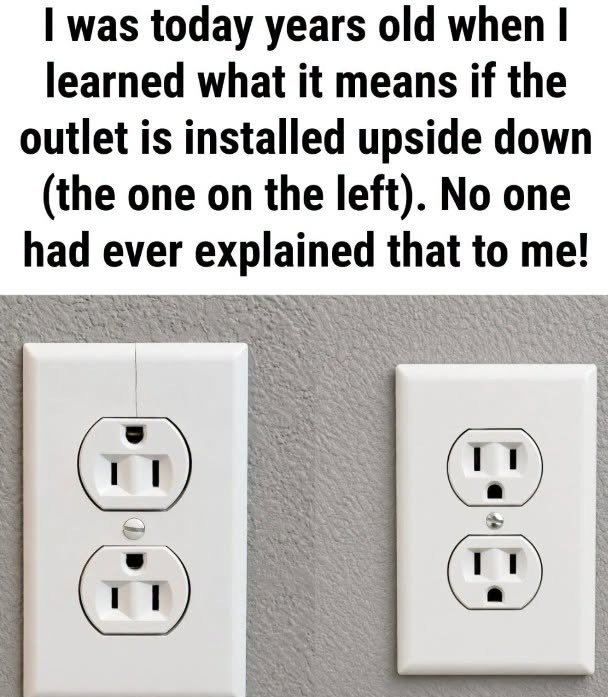
You’ve probably seen unusual receptacle orientations in hospitals and other healthcare facilities
That’s partly because electrical systems in these environments can have specific requirements and identification practices.
Certain receptacles may be visually distinguished based on the electrical system serving them.
But again, orientation alone isn’t a universal code for identifying a particular type of power source.
Color, markings, labels, and specialized receptacle designs may also be used.
Is an Upside-Down Outlet Unsafe?
If the receptacle was installed intentionally and is properly wired, the orientation itself doesn’t automatically make it dangerous.
The bigger concern is the condition and wiring of the receptacle.
Warning signs include:
A loose outlet
Sparks or arcing
Burning smells
Discoloration
Buzzing or crackling
A receptacle that feels unusually hot
Plugs that fall out easily
Visible damage
Those problems deserve attention regardless of whether the outlet is installed “right-side up.”
Is There a Correct Way to Install a Receptacle?
This is where things get interesting.
Electrical codes and standards can vary depending on the country, jurisdiction, building type, and type of installation.
In many residential situations, you’ll see receptacles installed with the ground opening facing downward, but the physical orientation isn’t necessarily what determines whether the receptacle is correctly installed.
What matters much more is that the receptacle is properly wired, grounded where required, securely mounted, and installed according to applicable electrical requirements.
What About the Breaker?
If you’re trying to determine why a particular receptacle is oriented differently, don’t assume you can figure it out simply by looking at it.
The circuit may have a specific purpose, or the electrician may have followed a particular installation convention.
If you’re curious about an outlet in your home, the safest approach is to check the home’s electrical documentation or have a qualified electrician inspect it.
Never remove the receptacle from the wall just to investigate.
Why Are Some Outlets Installed Sideways?
You may also encounter receptacles installed horizontally or in other orientations.
This can happen because of:
Space constraints
The design of the electrical box
The surrounding wall or cabinetry
A particular installation preference
Commercial or specialty applications
Again, orientation alone doesn’t tell you everything about the electrical circuit.
The “Ground Up” Debate