Another common source of confusion is the difference between raw honey and processed honey.
Raw honey is generally marketed as honey that has undergone limited processing, although the exact definition and permitted handling practices can vary by producer and jurisdiction.
Commercial honey may be filtered or gently heated to improve its flow, remove particles, simplify packaging, or delay crystallization.
Neither label, by itself, proves that a product is authentic.
Raw honey can be mislabeled or adulterated, just as processed honey can be genuine. Likewise, filtering does not automatically transform authentic honey into fake honey.
Consumers should distinguish between processing and adulteration.
Processing describes what happens to a product after harvesting. Adulteration involves adding or substituting substances in a way that misrepresents the product or violates applicable requirements.
A genuine honey may undergo processing while remaining honey. A product sold as pure honey may be adulterated even if it looks raw or minimally processed.
This distinction is important because marketing terms can create an impression of purity without providing sufficient evidence.
If you prefer raw honey because of its flavor or texture, choose a producer who explains how the product is handled. If your priority is authenticity, focus on traceability, accurate labeling, and credible verification rather than relying on the word “raw” alone.
11. Does Fake Honey Pose a Health Risk?
The health implications depend on the product’s composition, the substances added, and the way it was manufactured and handled.
Honey is primarily a source of sugars. Genuine honey contains small quantities of other naturally occurring substances, but it should not be regarded as a substitute for medical treatment or a guaranteed remedy for disease.
A product adulterated with food-grade sugar syrup may still provide energy, but it does not necessarily have the composition, flavor, or characteristics claimed by the seller. Consumers who pay a premium for a particular type of honey may therefore be misled about what they are purchasing.
Other concerns arise if a product is manufactured under poor hygienic conditions or contains undeclared ingredients, contaminants, or substances that do not meet food-safety requirements.
Adulteration is therefore not only a question of taste or value. It can also involve labeling compliance, consumer protection, and food quality.
There is an additional safety consideration that applies to honey regardless of whether it is genuine: honey should not be given to infants younger than 12 months because of the risk of infant botulism.
For older children and adults, honey can be part of a varied diet, but its high sugar content remains relevant. Describing honey as natural does not mean it should be consumed without moderation.
Consumers with specific dietary or medical concerns should consider the product’s actual nutritional composition rather than assuming that natural origin makes it suitable for every situation.
12. Three Practical Steps to Remember Before Buying Honey
After considering the physical tests, scientific evidence, and purchasing advice, the most useful approach is straightforward.
You do not need to perform a complicated experiment every time you visit a supermarket. Instead, develop a consistent habit of checking a few key details.
Step 1: Observe the honey, but do not judge it by appearance alone.
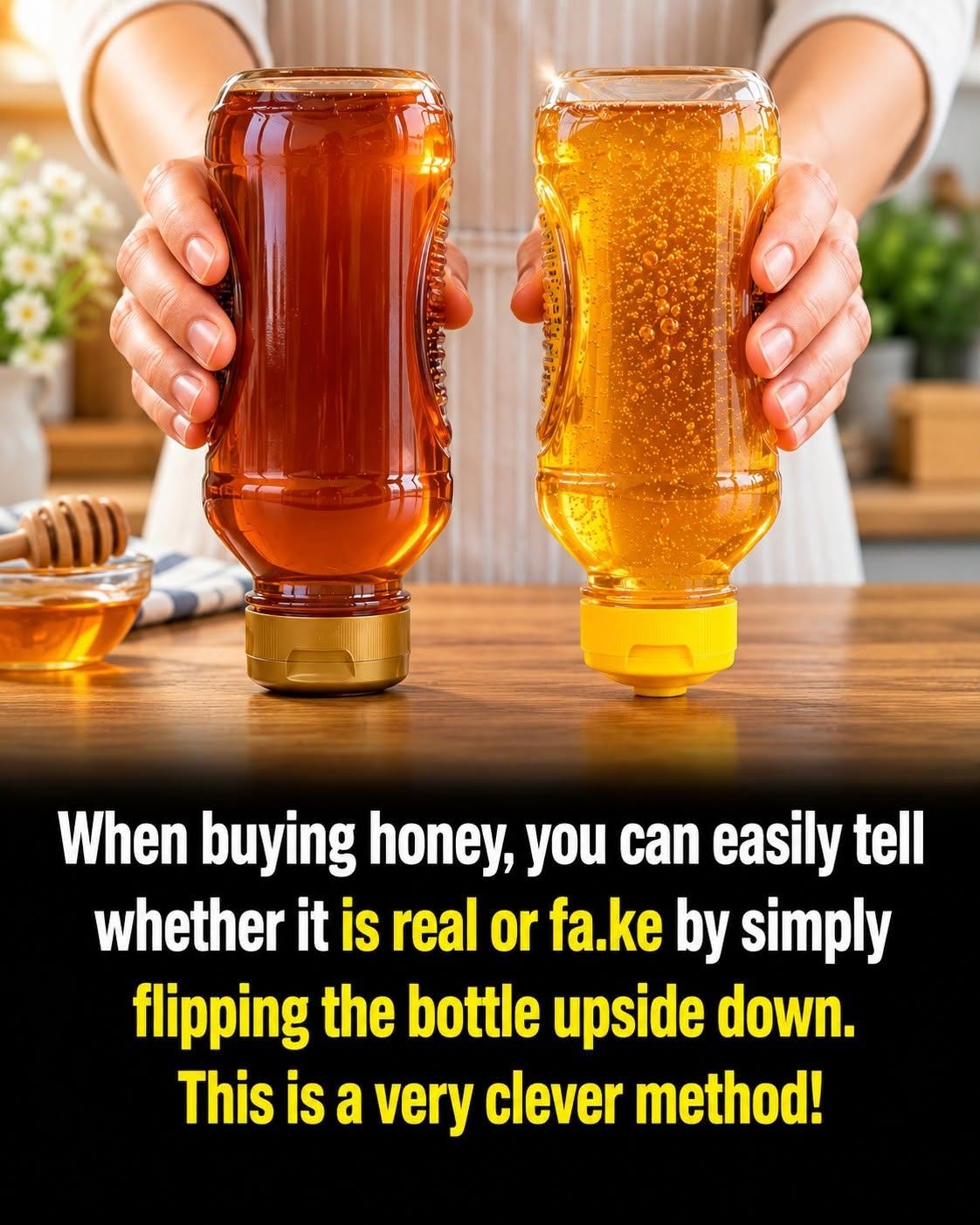
Check its consistency, color, and overall condition. The flip-and-bubble test or spoon test may reveal unusual physical behavior, but neither can establish authenticity. Natural honey varies considerably, so avoid treating one texture or color as the only acceptable standard.
Step 2: Read the label and investigate the source.